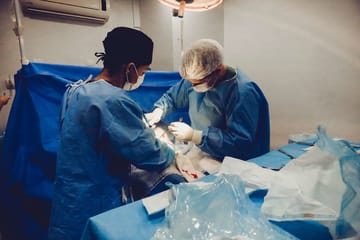

Subjects and Methods:
The study group comprised 1144 patients. Univariate and multivariate analyses were performed to assess the following 14 postoperative risk factors for wound infection.
results:
Univariate analysis showed that the following 4 risk factors were related to wound infection: tumor location right-sided colon cancer, a preoperative serum albumin level of ?2.5?g/dL, anastomotic technique [functional end-to-end anastomosis (FEEA)], and sutures used at the time of wound closure non–polydioxanone sutures (PDS)-Plus. Multivariate analysis indicated that 3 factors were independent risk factors for wound infection: a preoperative serum albumin level of ?2.5?g/dL, FEEA, and the use of non-PDS-Plus sutures wound closure.
Risk factors for wound infection after laparoscopic surgery for colon cancer were a preoperative serum albumin level of ?2.5?g/dl, FEEA, and the use of non-PDS-Plus sutures.
Elective surgery for colorectal cancer is semi-contaminated surgery, and postoperative wound infection develops in 3% to 26% of patients. Diabetes mellitus and malnutrition, a body mass index of ?25,5 open surgery, and the use of non–polydioxanone sutures (PDS)-Plus sutures at the time of wound closure have been reported to be risk factors for postoperative wound infection. Wound infection can cause pain and distress and prolong the hospital stay of patients, markedly increasing health care costs. Therefore, measures against wound infection have been taken, including modification of the period of treatment with antibiotics given to prevent wound infection, preoperative bowel preparation, and the placement of drainage tubes. The aim of our study was to retrospectively analyze wound infections that developed during perioperative care in patients who underwent standard laparoscopic surgery for colon cancer in the same hospital and to thereby clarify risk factors for wound infection.
SUBJECTS AND METHODS
The study group comprised 1144 patients with an initial single colorectal carcinoma who underwent laparoscopic surgery in our hospital from January 2010 through December 2017. Patients who underwent elective laparoscopic surgery for primary single colon cancer were included in the study. Patients who underwent emergency surgery or who had a diverting stoma were excluded from the study. There were 650 men (57%) and 494 women (43%), with a mean age of 67.6 years (range, 22 to 93?y). Patients who preoperatively received chemotherapy, underwent emergency surgery, or were switched to open surgery were excluded from the study. Right-sided colectomy was performed in 474 patients (41.4%), and left-sided colectomy was performed in 670 patients (58.6%). The following 14 risk factors for wound infection were studied: sex (male vs. female), age (below 65?y vs. 65?y and above), body mass index (kg/m2), American Society of Anesthesiologists physical status classification score (class I or class ?II), the presence or absence of diabetes mellitus, tumor location (The cecum, the ascending colon, and the transverse colon were defined as the right-sided colon. The descending colon, the sigmoid colon, and the rectosigmoid colon were defined as the left-sided colon.), preoperative serum hemoglobin levels (<10 or ?10?g/dL), preoperative serum albumin levels (<2.5 or ?2.5?g/dL), operation time (<180 or ?180?min), bleeding volume (<50 or ?50?mL), anastomotic technique [functional end-to-end anastomosis (FEEA) or other procedures], tumor diameter (<4 or ?4?cm), pathologic tumor stage (?II or ?III), and sutures used at the time of wound closure (PDS-Plus or non-PDS-Plus).
Surgical Procedure
At the start of surgery, a small surgical incision was made in the umbilical region regardless if the lesion was present in the right or left side of the colon. A12-mm port was placed in the umbilical incision. Carbon dioxide was delivered at a mean rate of 8?mm?Hg/h to induce pneumoperitoneum. A 5-mm laparoscopic flexible fiberscope was inserted into the 12-mm port. While examining the abdominal cavity, two 5-mm ports each were placed in the left and right sides of the middle-lower abdomen. A total of 5 ports were used.
In patients with right-sided colon cancer, the dissection sites of arteries were determined on the basis of the sites and stages of tumors arising in the region of the ileocolic artery, right colic artery, and the middle colic artery. As for intestinal dissection and anastomosis, the umbilical wound was extended to about 4 to 7?cm. The intestine including lesions was adequately exposed outside of the body, and FEEA was performed. In patients with left-sided colon cancer, dissection was extended to the root of the inferior mesenteric artery if the depth of invasion was diagnosed to be clinical T3 or deeper. As for intestinal dissection and anastomosis, the umbilical wound was extended to about 3 to 5?cm depending on the status of the lesion. FEEA was performed if the lesion could be adequately exposed. If the intestine could not be exposed outside the body, the mesentery was treated in the body, and the distal colon was then cut using an automatic suturing device. The lesion was pulled out of the body from a small surgical wound, and the proximal colon was transected. Subsequently, the tip of an automatic anastomosis device was placed in the resected margin of the proximal colon, and the proximal colon was returned to the abdominal cavity. Patients who underwent elective laparoscopic surgery for primary single colon cancer were included in the study. Patients who underwent emergency surgery or who had a diverting stoma were excluded from the study.